The Sonora Union High School District Board of Trustees has received a report from superintendent Ed Pelfrey about actions needed to develop and pass a bond measure to provide funds to renovate the Dome building and fund other needed projects. The Board decided not to pursue a bond measure. Mr. Pelfrey also presented four options for the District to retain ownership of the building with another entity funding and managing renovation of the Dome. These options are 1) lease agreement, 2) licensing agreement, 3) joint occupancy agreement, 4) public/private agreement. Our preferred arrangement is for us to own the building and proceed with our vision for renovation. However, for five years the Board has not even considered this idea. So, it seems that the best chance for saving the building may be one of the four agreement options presented by Mr. Pelfrey.
It does not seem practical for the District to continue to own the building and become a landlord. They do not now have the ability to properly maintain the building and there is no indication that their ability will improve. The District would not receive any funds for maintenance from the building while it was being renovated, and all renovation costs payed by the lessee would off-set lease payments for many years after the building became occupied. So the cost of maintenance would continue be the responsibility of the District for many years. This is a financial responsibility the District cannot afford. In addition, continuing to own the building and becoming a landlord, does not contribute to the educational mission of the District.
We can see no rational reason for the District to retain ownership of the Dome, and all of the options presented have sever negative issues that may make them completely untenable, so the building may be destined to decay beyond repair.
The Historic Dome Preservation Group has been eager to attain the historic building from the Sonora Union High School District since December of 2018, however the District has been preoccupied with several other more immediate issues. However, recently the District has placed the disposition of the building at a higher priority and has made several positive moves to advance the process of disposing of this surplus property. The Dome and the two classroom wings north of the Dome building have again been declared surplus property and have been available to various governmental entities for acquisition, for the past three months, but the District has received no notice of interest. The property is now available to the general public. The District has had a land survey done and is having the surplus property appraised. When the appraisal is complete it will be made public and we will then submit an offer. This will probably occur in February of 2023.
The Historic Dome Preservation Group will soon be reaching out to the public to support the School Board of Trustees and the HDPG in the agreement we develop with the District. Additionally, we will be starting a fund raising campaign to pay the expenses of acquiring the property and to repair the leaking Dome building roof.

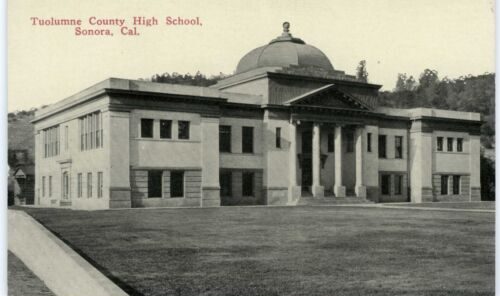
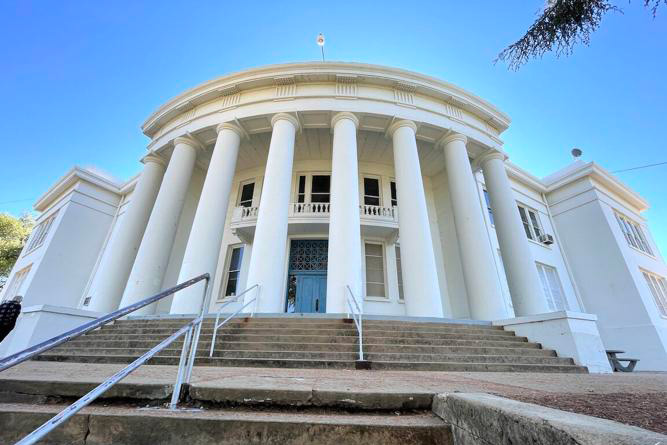
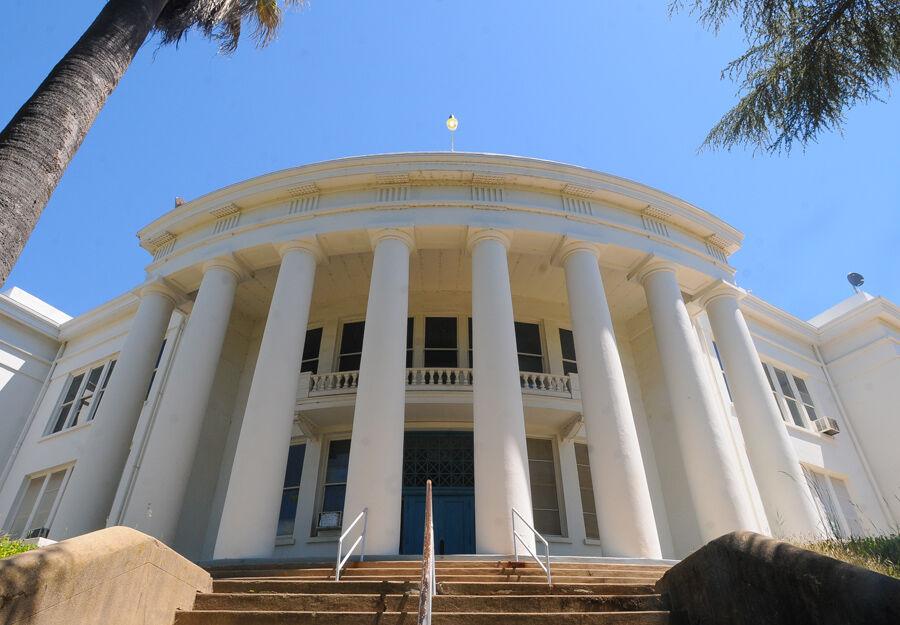
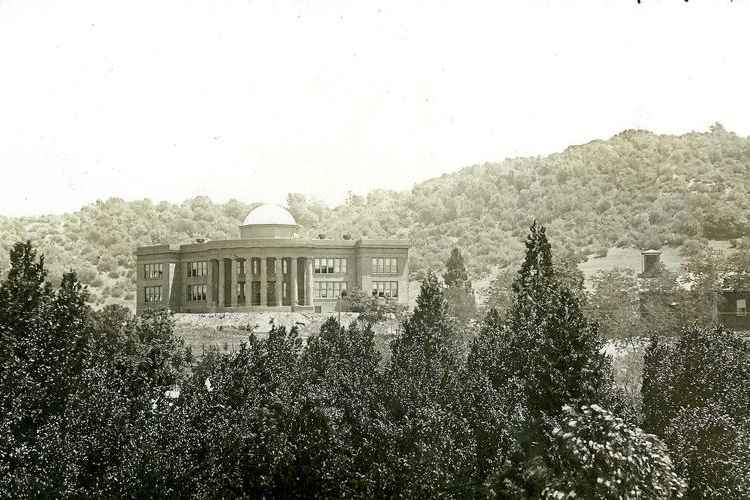
High atop the hill looking over downtown Sonora, the historic Sonora Dome building has been a feature of the city’s skyline since it was erected in 1909.
Once home to Sonora Elementary School, the building was vacated in 1967 when it was deemed unsafe to house students under new California state mandates for earthquake preparedness, and has since fallen into disrepair.
In the 55 years since, the Sonora Union High School District has struggled to find a solution, finally listing the property as surplus to be sold or donated in January 2018. Last year, an advisory committee recommended that the property, including the dome, two classroom buildings and Lions Park, be designated as surplus property to be sold or donated.
“When it became surplus property about four years ago, that’s when we really started to become active,” said Allan Zimmerly, the president of the HDPG. “We became a 501(c)(3) nonprofit corporation because it was surplus property. We thought, ‘now we can move.’ ”
But since then, Zimmerly said, no real progress has been made, despite the best efforts of community members.
“It’s not been a priority for them,” he said of the district. “We have provided them with several different outlines for the board of trustees to start the discussion. We have provided them with different configurations. It has not been on the agenda for four years.”
The HDPG’s plan would turn the dome into a museum and art gallery, which would serve as a cultural center for Sonora, Zimmerly said. The group would rely on grants and community donations to fundraise for renovation and upgrades to the building, and would seek to become financially sustainable by leasing out former classrooms as office space for local arts organizations and businesses to help offset costs.
“An arts and culture center would be an additional attraction to the county,” Zimmerly said. “It displays to the rest of California, to the rest of the Bay Area, that we’re not just some little town that’s drying up because the timber industry is going downhill, that we have reason to move here, to live here.”
Over the past few weeks, the HDPG has undertaken a media campaign to apply renewed pressure to school board officials and bring the dome preservation issue back into the public eye.
According to Sonora Union High School District Superintendent Ed Pelfrey, there has been a renewed focus on the dome by trustees. Recently, Pelfrey led members of the county Board of Supervisors on a tour of the dome, including District 1 Supervisor David Goldemberg, who represents the City of Sonora.
Goldemberg’s office looks out at the dome, he said, so the building and the stagnation in renovating it are often on his mind.
“Every day, I look at the dome and go, ‘Man, it’s just sitting there,’ ” Goldemberg said.
While Goldemberg said he appreciates the passion Zimmerly and the HDPG have poured into the process, he doesn’t believe the group has the capability of handling a project as big as this one looks to be.
“I’m not looking to exclude them — they’ve put a lot into it. But, by my estimation, it’s not going to move forward unless we get a bit more formal,” Goldemberg said. “I think that we really need to get a broader range of people involved.”
Zimmerly said the HDPG is prepared at any time to start its fundraising process if the district expresses an interest in selling the property, but doesn’t want to begin until that is clear.
“I know what you’re going to ask me, ‘How much money do we have?’ ” Zimmerly said. “We don’t have any money. Literally. But there is no point in going out for donations or applying for grants when there is nothing to buy.”
While the HDPG doesn’t have the funds necessary to purchase the building now, Zimmerly said he is confident in the organization’s fundraising infrastructure should it become apparent that the district is willing to sell them the building.
“The support for renovating the dome is real high — nobody wants to see the dome demolished,” he said. “I think it would be relatively easy to raise a couple hundred thousand (dollars) fairly quickly in this community for the initial acquisition and insurance and getting the roof repaired.
“Apparently, the money is there. And I’m beginning to believe — I have to believe — that it can be tapped.”
The group Goldemberg suggests could include Sonora City Council members and staff, members of the county Board of Supervisors, the Sonora Area Foundation, the Sonora Chamber of Commerce, Visit Tuolumne County and members of the Sonora business community, he said.
“I’m not a big proponent of always forming another committee — I’m a member of many,” Goldemberg said. “But, on the other hand, I think we need to essentially get the people of the community’s support and certainly, within their small group they have that. But I think we need a more broad base.”
The school district had its most recent Board of Trustees meeting July 12, during which Zimmerly said Pelfrey updated the board on the current status of the dome.
Pelfrey said he plans to add the dome to the agenda at the next trustee meeting on Aug. 9, which will clarify information about what exactly is for sale on the total parcel of land.
“There will be an action item going to the board of trustees at our next meeting,” Pelfrey said, “determining what will be surplus and offering the surplus property for sale.”
While the district’s board has struggled in past efforts to find a suitable buyer for the dome, which has left the building in limbo, Pelfrey said that is not indicative of its level of focus on finding a solution.
“I think the board is interested in getting that resource into the hands of an organization who can use it for the betterment of the community, and also maintain it as a historical building of great value to the community,” Pelfrey said.
Pelfrey declined to comment explicitly on whether he thinks the HDPG is the best-suited organization to take ownership of the dome moving forward.
“I know there is a lot of interest in preserving the dome and using it as a resource for our community, and I know there are a lot of people interested in that at this time,” he said. “I appreciate the intent and the efforts of Mr. Zimmerly and the dome preservation group. The work with the group has helped me see what the stumbling blocks were in the past.”
One specific challenge that Pelfrey said HDPG’s work has helped him understand is parking around the dome building, and the efficacy of a shared-use agreement with other entities which share the space.
Pelfrey said the school board will look into shared-use agreements for parking to open up more possibilities for finding new ownership.
“We have worked with both our district counsel and JPA to make sure that we can do some shared parking agreements with anyone that is interested in the property,” he said.
Goldemberg, who is also involved in the arts community within Tuolumne County, said he is supportive of the idea of the dome being converted into a space which would serve the arts in the region.
“I believe the arts are a really positive factor that can change communities and make them more desirable,” Goldemberg said. “There are distinctive economic benefits to having a more vibrant, cultural community.
“When you’re looking at economic development, when you have more culture in a community, it tends to strongly lend itself to very positive results, and those can be parlayed into attraction on the economic side.”
Goldemberg said he has spoken with City Administrator Melissa Eads, who also supports finding a resolution for the dome.
In Goldemberg’s view, the next step is for city officials and administrators to also take a tour of the building to get a better understanding of what is at stake and what the building needs.
“It’s really important to have your eyes looking at it and you’re walking through it and you get so much of a bigger feel for what’s going on,” he said.
Goldemberg said he thinks the new group ought to spend a limited amount of funds to find a path forward from a qualified consultant. One contractor estimated $15,000 to give the city a path to take.
“Before we apply for any funding, we want to have our eyes open if there are any ‘gotchas’ that are out there,” he said. “Once we were there, we could then be able to make some decisions on how to move forward. Their board has to approve any direction that we go in, and I would hope that they would do so.”
No matter who takes ownership, Zimmerly said the building will require seismic retrofitting, as well as alterations to adhere to Americans with Disabilities Act (ADA) requirements, which could be solved by an exterior elevator that would go to each floor.
No matter who ends up owning the building and overseeing its renovation, Zimmerly said, change needs to come for the Sonora Dome.
“The building itself is just a venerable icon, this graceful old building that just cannot be torn down, both physically and emotionally,” Zimmerly said. “People would be lining up to chain themselves to those columns on the front of the building if there were bulldozers parked out here.
“You can’t take a landmark like this, an icon like this, and demolish it or let it rot until it caves in.”
Contact Dominic Massimino at dmassimino@uniondemocrat.com or (209) 588-4526.

The Historic Dome Preservation Group, a 501c3 non-profit, is hoping to develop a regional art and cultural center at the Sonora Dome property.
The dome, which was previously an elementary school, is currently owned by the Sonora Union High School District. The non-profit group was formed in hopes of acquiring the facility, renovating it, and creating a fiscally sustainable arts center.
This weekend’s Mother Lode Views will feature the leader of the organization, Allan Zimmerly. He will talk about the group’s vision, the history and current status of the building, and the challenges the potential project faces.
The historic dome building has been vacant for nearly a decade.
After nearly two years, an advisory committee has approved a recommendation to the Sonora Union High School District Board of Trustees in support of selling or donating the historic Sonora Dome, two adjacent former classroom buildings used by Tuolumne County Arts in recent years, and Lions Park.
The committee, which was formed in 2019, met for potentially the final time on Wednesday after the near-unanimous decision to endorse a report that recommends declaring the 112-year-old dome, two buildings and park as surplus to facilitate a potential sale or donation to governmental or nonprofit organization.
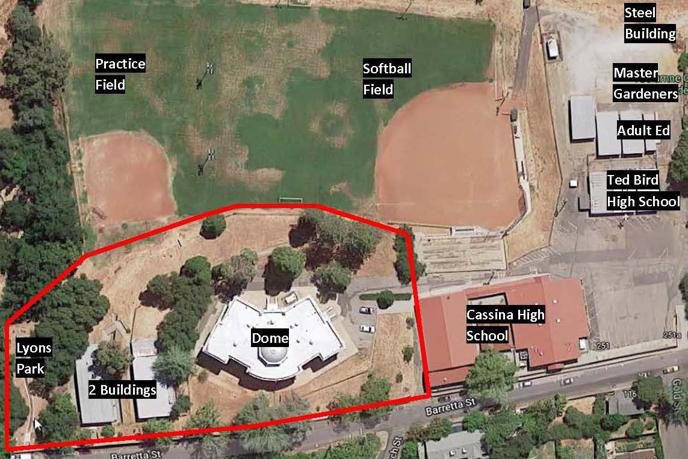
Not included in the recommendation to be declared as surplus are the buildings on the other side of the dome currently used by the district’s alternative education programs, Cassina and Ted Bird high schools, as well as the athletic fields used by a number of schools and youth sports organizations for practice and games.
Constructed in 1909, the dome originally housed Sonora Elementary School until 1967 when it was deemed legally unsafe to house students due to a lack of seismic outfittings and preparedness. The building has since languished as unsellable due to meager parking, despite community interest in seeing it utilized and preserved.
Lions Park was added to the package of properties being recommended for the surplus designation at the committee’s meeting on Feb. 10, which drew objections from members of the Sonora Lions Club who donated the park to the school and spent money over the years on its maintenance.
The committee discussed the club’s objections that were reported in The Union Democrat on Feb. 11, though most members said they still supported including it with the recommendation because it could be converted into parking and make the overall property more attractive to a potential buyer.
“I’m doing my best to look out for the best interest of the district and the students,” said Chris Nugier, a committee member.
Another committee member, Sheri Hoffman, said she spoke with someone from the Lions Club who determined the club had spent about $36,000 over the years maintaining the park. She suggested the district could make a donation to the club with proceeds from the sale.
“Perhaps a nice donation back to the Lions for taking care of the park, or being willing to give it up, or some kind of political move, if you will, could be negotiated if in fact it was something that was needed to sweeten the deal for whoever the buyers will be,” she said.
The committee voted 6-0-1 to approve the recommendation, with member Peter Ghiorso abstaining because he also serves on the Sonora Planning Commission and was advised not to vote in case the property ever comes before the commission for some reason. Committee member Randy Selesia was absent.
Cindy Costello, administrative assistant to the district superintendent, said the recommendation could be presented to the Board of Trustees at its next regularly scheduled meeting on March 9 if the committee provides her with a final draft by next week.
Members of the Lions Club were still not in favor of the decision to declare the park as surplus, especially if it ultimately becomes a parking lot.
“We’re not happy with anything that’s going to sell it or deny it from being a park for the community,” said Phil Baylis, president of the club. “Our biggest thrust with the Lions Club is doing good for the community.”
Baylis acknowledged there were access issues getting to the park, which he said is only via walking in or through the adjacent baseball diamond, though the club feels the area is already lacking enough public spaces for people.
The club donated the park to the district sometime between 1979 and 1980.
“There’s not really a right of ownership to the park (by the club),” Baylis said. “We’re just going to have to see what the recommendation does.”
A feasibility study presented at the committee’s previous meeting showed the dome had an estimated valuation of $5.5 million for insurance purposes, while the two classroom buildings had an estimated insurance value of about $600,000 each.
The buildings previously housed day care and cosmetology school on the campus, but have been used in recent years by groups that include Tuolumne County Arts and KAAD-LP community radio.
Tuolumne County Arts currently pays $3,600 a year to rent the space it uses in the buildings. Laurie Livingston, the organization’s executive director, could not be reached for comment.
People who are part of the Historic Dome Preservation Group have also pushed for the athletic field below the dome to be included as surplus property, though the report approved by the committee determined the district is in an agreement through 2022 with Youth Sports Foundation for use of the field.
Contact Alex MacLean at amaclean@uniondemocrat.net or (209) 768-5175.
The Sonora Lions Club plans to contest a non-binding recommendation from an advisory committee to the Sonora Union High School District Board of Trustees that the small Sonora Lions Park at the Cassina High School campus on Barretta Street be declared surplus property as a part of an overall effort to sell the historic Sonora Dome.
The advisory committee voted unanimously on Wednesday to approve the recommendation, presumably concluding an evaluation of the campus which has lasted over two years. Members of the Lions Club were shocked by the news when contacted by The Union Democrat on Thursday.
“We have not been contacted,” said Thomas Penhallegon, a member of the Sonora Lions Club. “No one has said anything about it. If we have ownership, we want to hear about it. We want to know what documents turned it over to them. That’s what we want to know.”
Jim Gormely, a member of Lions Club for more than 30 years, said the organization donated the park to the district 40 years ago on the condition that it would always be Lions Park. At the time, the land was owned by two members of the club, he said. He estimated the group has spent $40,000 in upkeep and renovation to the park since that time.
“The Lions Club has put the park together for the use of the community, so we would certainly be objecting to it being sold,” he said. “The reason we made the investment is because the community could use the park.”
The members asserted that ownership of the property by the district was symbolic because of their consistent maintenance work there.
President Phil Baylis estimated the size of the park at about a half-acre to three-quarters of an acre. He said the nonprofit set the area with a plaque about six to seven years ago to denote the dedication to the district. The park is set with benches, grass, trees, and sandy pits.
Gormley said the plaque includes names of the original members.
The Sonora Lions Club was chartered April 24, 1922 and has 51 members, Baylis said.
The vote by the committee functions as a recommendation and is non-binding, meaning Sonora Lions Park is not surplus yet. The committee is expected to bring its findings to the district’s board, which will presumably vote on whether to declare the property surplus or not.
If they do, it will mean the property will be for sale, just like the Sonora Dome and two vacant classroom buildings beside it, which were voted to be surplus by the board in 2018 following another lengthy advisory process.
It has been a foregone conclusion by the district that the evaluation of the campus property, which includes the ballfield and the Sonora Union High School district alternative education campus Cassina High School, included Sonora Lions Park. The advisory committee was formed in 2019 as a potential means of facilitating a sale of the historic, centenarian Sonora Dome, which has languished as unsellable due to meager parking.
Committee member Carl Tucker asked during the meeting if the Lions Club was notified of the decision, but was told that it likely had not been told or included in the process.
“Have they said anything?” Tucker asked. “I certainly think notification to the Lions Club may not be a legal responsibility, but it is certainly the right thing to do.”
Superintendent Ed Pelfrey could not be reached for comment on Thursday.
According to California law, an advisory committee must be convened to evaluate a property before the Board of Trustees can designate all or a portion of it as surplus and open it for sale.
The declaration of a property as surplus by a legally bound government entity like a school district is the first step in being able to receive bids on the property and enter in sale negotiations.
Sale negotiations — as many district employees know now following the contentious legal wrangling over the failed sale of the district-owned Wildcat Ranch, costing the district hundreds of thousands in legal fees and penalties — are bound by the Brown Act, a government code which allows for public participation and transparency in government meetings.
The less than 7-acre dome property includes Cassina High School, a continuation high school for 10th through 12th grades in the Sonora Union High School District, the independent study program Theodore Bird High School and the district adult school.
The Sonora Dome is located on the site and was originally constructed as Sonora Elementary School. It was vacated after a 1967 seismic inspection, was later purchased by the Sonora Union High School District and used as an office until 2010.
Some groups interested in the dome said Thursday that the decision from the committee did not go far enough.
Allan Zimmerly, president of the Historic Dome Dome Preservation Group, said the sale of the dome was still not viable because the surplus property recommendation of just Lions Park was insufficient to meet parking mandates set by the city. He requested that the committee consider a secondary recommendation to consider the grass sports practice field next to a baseball diamond and below the dome as additional surplus property.
“I think that they have not evaluated the issue correctly,” he said. “To simply say it’s being used and therefore not surplus is the wrong approach. It should be evaluated for its efficient use.”
The Historic Dome Preservation Group hoped to restore the dome, utilizing it for art classrooms, gallery space, and performing arts performances. They made six proposals to the committee, and its members spoke in support of the goal.
Parking additions and renovations to the dome and surrounding property have been estimated at $7 million to $10 million.
The work of the committee was hampered by an early resignation and disrupted for over half a year by the COVID-19 pandemic. It has had 11 meetings since October of 2019, according to a district agenda page.
Since the committee’s formation, its members have reviewed information from city officials, district officials and evaluated the use of the property surrounding the dome. If a property has a meaningful and legitimate use by students, it cannot be considered surplus and therefore cannot be eligible for sale.
That supposition guided the committee to its eventual decision to not declare the vast majority as surplus, determining that the alternative education site buildings, gym, portables and playing field were being used by Cassina High School, Ted Bird High School, Adult Education and maintenance storage. Additionally, portables and outlying areas of the property are used by KAAD radio, Cable 8, the county Superintendent of Schools office, the UC Master Gardeners exhibition garden, and the Youth Sports Foundation. The Sonora High School girls softball teams, Sonora High School and recreational soccer teams and youth football teams also use the athletic field on the property.
During the discussion on Wednesday, committee member Larry Beil noted the athletic fields were not true surplus because they were used by district sports teams.
“The practice field is used by Sonora High students, and it’s also used by the community,” said committee member Donna Berry, noting its use by travel soccer teams, travel softball teams and recreational league practices. “As a parent who has tried to secure practice fields for different sports, I’ll tell you how hard it is already.”
The district entered into a memorandum of understanding with the Youth Sports Foundation of Tuolumne County for use of the play field in 2012, with both parties contributing to its renovation. The 10-year agreement lasts through August 2022.
The District provided a cost analysis of the dome and Cassina High School, suggesting during the meeting that an eventual move of the alternative education campus to the current Sonora High School campus remained an enduring possibility.
As the report was scrolled through on the webinar, Pelfrey said it was intended to determine if a consolidation to the main campus would be possible.
The values were held to the 2018-19 school years due to COVID-19 convoluting some of the totals, the report said.
The total expenditures of the campus included water and sewer, electricity, maintenance and operations salaries, and transportation, totalling just under $143,000. Revenues from groups renting at the site and a state stipend were projected by the district to be $22,221.
The report also includes valuations of the various buildings on the campus based on their replacement cost. The Dome building is estimated at approximately $5.5 million, while the two adjacent surplus buildings are more than $600,000 each. The buildings, including classrooms, the gym, portables and sheds, top $3 million.
“I think that moving the campus, moving Cassina and the alternative ed over would free that land for parking and would be a very good solution to the parking problem, but that is speculative, and if it does not happen then the parking problem is not solved,” Zimmerly said.
Beil noted maintenance costs reflected in the report were not necessarily representative of the true burden of the campus, because some projects primarily at the dome were not being completed at this time.
Additional costs not considered are cleanups from the homeless, vandalism, seasonal landscaping and the aging of the infrastructure, the report said.
The next meeting of the committee is set for 2 p.m. Feb. 24, when the newest recommendation draft to the district board will be reviewed.
Contact Giuseppe Ricapito at gricapito@uniondemocrat.net or (209) 588-4526.
Read the article on UnionDemocrat.com at: https://www.uniondemocrat.com/news/article_57c4ff3a-6fcf-11eb-af5f-4f4ed8abb2d4.html

As it will save the Sonora High School District about $20,000 a year, the move makes financial sense.
School trustees in April voted to move the district office from the stately and historic Sonora Dome to a far smaller building on Sonora High’s Shaws Flat Road campus. Nobody challenged the plan, rightfully reasoning that every dollar saved to pay teachers and educate students in this era of limits is justified.
On the downside, the move leaves a landmark Sonora building vacant and locked up for the first time in its 100-year history. Empty buildings, even landlords would agree, tend to deteriorate over time. It’s not wear that could do the old building in, but neglect.
Among estimated cost savings for the High School District’s move would be money that until now has been spent on the dome’s wooden floors ($3,000 a year) and its 100-year-old galvanized plumbing ($500). Its heater and a limping, 38-year-old air conditioning system will be shut down. And for the first time in its long life, the dome will not be part of Tuolumne County’s educational landscape. On the plus side, District Superintendent Mike McCoy promises the district will continue to maintain the old building and, if possible, lease it out for a compatible use.
“We recognize its historic significance in the community,” McCoy said. “Right now we have no agenda for the Dome, but we’re open to suggestions.”
Financed with a $50,000 bond issue passed by Sonora School District voters, the Barretta Street Dome was completed in 1909 and dedicated in cornerstone-laying ceremonies on April 2 of that year.
Headlines trumpeted completion of the new schoolhouse: “HUNDREDS WITNESS PLEASING EVENT,” reported The Tuolumne Independent. “With pride and enthusiasm, Sonora dedicates her magnificent new grammar school building.”
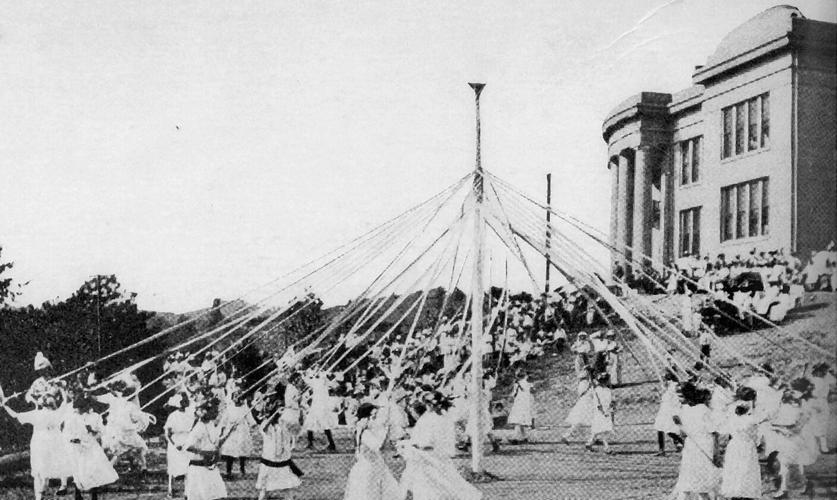
For 58 years, the Dome and surrounding buildings constructed later were home to Sonora Elementary School. But enrollment grew steadily, then spiked in the 1960s. It hit 738in 1966, far surpassing campus capacity. The coup de grace came in 1967, when state architects ruled that the Dome didn’t meet seismic standards and could not legally house students.
after several tries, district voters approved a bond issue to build a new, $674,000 campus off the yet-to-be constructed Greenley Road. That school opened in September of 1973, and in ’74 the elementary school district sold the Barretta complex to Sonora High. The campus’s earthquake-legal classrooms housed the high school’s continuation and alternative ed programs. The Dome was leased to the Tuolumne County Schools Office until 1982, when the Sonora High District administration took over.
Now McCoy and his staff are moving out, and an eerie silence seems to be settling in. The next chapter in the Dome’s unfolding story remains unclear.
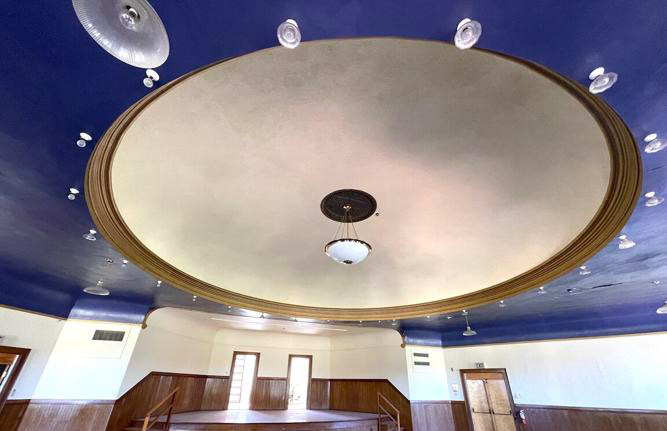
Seismic improvements costing well over $2 million likely preclude classroom use. Also, the three-story building does not comply with the Americans with Disabilities Act, and installation of an elevator would be prohibitively expensive. On top of all that, the Dome is virtually without parking, making commercial use problematic and probably illegal under city ordinance. But there are still avenues to be explored: Use by nonprofit agencies or charities as a kind of mall or clearinghouse. Or perhaps as an arts center, with a series of studios and the still-stunning second floor auditorium for shows and recitals.
Maybe the county’s energetic Economic Development Authority has a plan. Or grants could possibly fund renovation that would transform the Dome into the vibrant community center it was during Sonora Elementary’s heyday.
The Sonora High School District is the building’s current steward and must keep it from the ravages of neglect. But the Sonora Dome is a community landmark and its future is a community responsibility. The more ideas and energy that go into it, the better that future will be.
Read this article on UnionDemocrat.com at: https://www.uniondemocrat.com/news/article_84b5a7cb-acac-58c9-a7ea-f169f68a910c.html